
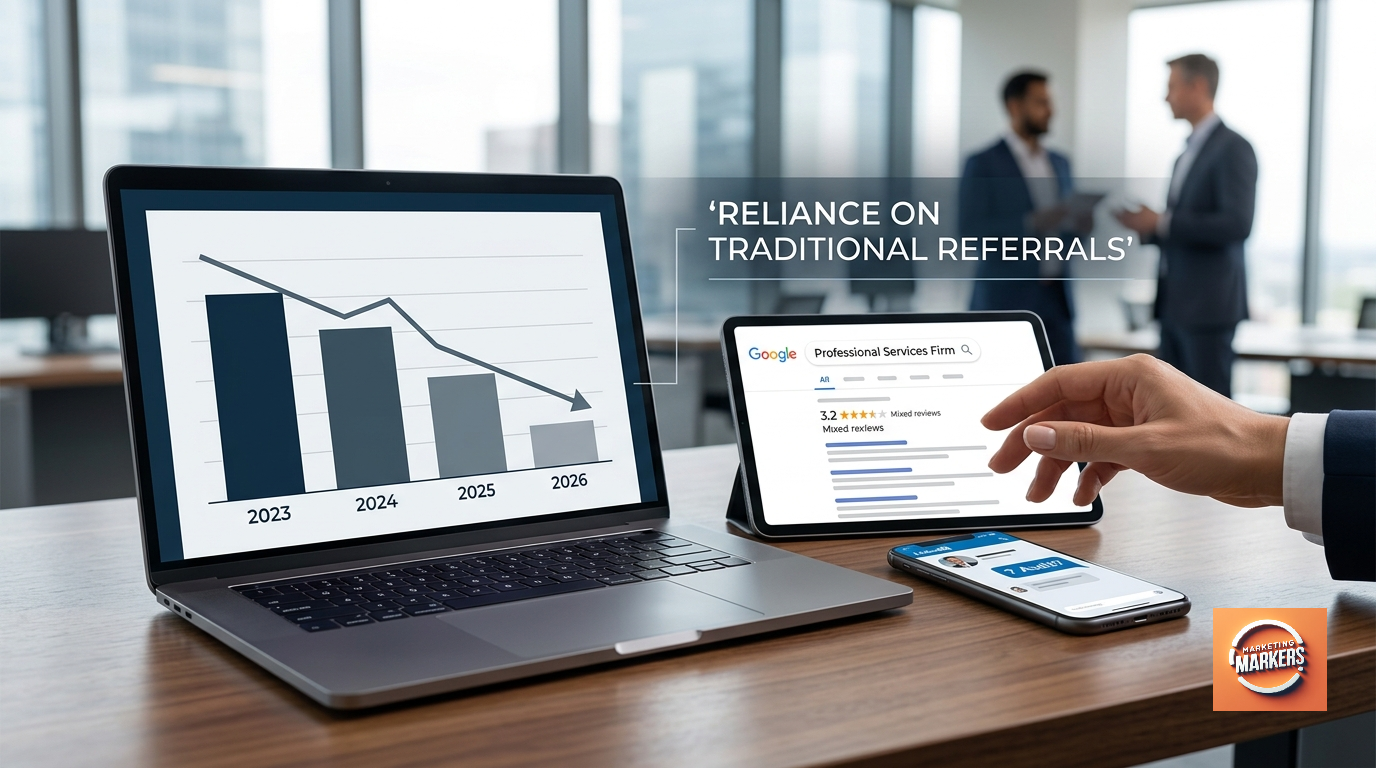
For decades, professional services firms—law firms, accounting practices, architecture studios, and enterprise consultancies—relied on a single, bulletproof growth engine: the word-of-mouth referral. The playbook was simple. You did great work, a satisfied client passed your name to a peer over golf or lunch, and a few days later, your phone rang. The deal was practically closed before the first meeting even started.
But in 2026, that traditional pipeline is breaking. If your firm’s growth strategy relies solely on “reputation and relationships,” you are likely watching your closing rates dip without understanding why.
The truth? The referral isn’t entirely dead, but the blind trust that used to come with it is gone.
The Data: The Slow Fade of the Peer Referral
Recent industry data highlights a sobering trend for B2B and professional services leaders: While peer recommendations remain part of the buyer’s journey, traditional peer-driven referrals are declining by 3% to 5% annually.
Traditional Referral Volume Over Time
2024: [████████████████] 100%
2025: [███████████████░] 95%
2026: [██████████████░░] 91% (-3% to -5% annually)
This isn’t happening because your clients suddenly stopped liking you, nor is it because your work has slipped. It’s happening because buyer behavior has fundamentally transformed. In 2026, modern buyers are digital natives who value peer input but demand independent validation.
The “Blind Trust” Era is Over
In the past, a referral acted as a shortcut past the vetting process. Today, it acts merely as a starting point.
When an executive receives a recommendation for a professional firm, they don’t immediately pick up the phone. Instead, they perform a digital double-check.
[ Peer Recommendation ] ➔ [ Google / Social Search ] ➔ [ Review Vetting ] ➔ [ Decision to Contact ]
Before your business development team even knows a prospect exists, that prospect has already audited your firm through two primary digital filters:
1. The Google Search Vetting
The moment your firm’s name is dropped, it goes straight into a search engine. Buyers are looking for your website, your thought leadership, and your active presence. If they find an outdated website that looks like a static brochure, a blog that hasn’t been updated since 2023, or worse—almost no search footprint at all—cognitive dissonance sets in. They begin to ask themselves: “If this firm is as sophisticated as my colleague says, why is their digital presence so primitive?”
2. The Online Review and Social Proof Audit
B2B and professional services buyers now expect B2C-level transparency. They are actively searching for third-party validation via Google Business Profiles, industry-specific review platforms (like Clutch or G2), and unfiltered commentary on platforms like LinkedIn and Reddit. If your firm has a 3.2-star rating from three random reviews left years ago, or an entirely blank profile, the trust generated by the personal referral evaporates instantly.
The Invisible Leaking Pipeline: You aren’t losing clients because your pitch failed. You are losing them because they researched you anonymously, found your digital footprint lacking, and quietly eliminated you from their shortlist without ever filling out your contact form.
How Professional Firms Must Adapt in 2026
To survive the death of the traditional referral, firms must transition from passive relationship management to an active Digital Trust Framework. Here is how to capture the modern referred buyer:
- Own Your Branded Search Results: When someone searches for your exact firm name, what do they see? Ensure your website is fast, modern, and clearly articulates your specific value proposition.
- Build an Intentional Review Pipeline: Don’t leave your online reputation to chance. Implement a systemized process to request reviews and case study interviews from your satisfied clients.
- Deploy Inbound Thought Leadership: Show, don’t just tell. When a referred buyer lands on your site, they should find insightful, up-to-date content that proves you understand their industry’s current pain points.
Final Thought: The New Definition of Word-of-Mouth
The word-of-mouth referral hasn’t disappeared; it has simply moved online. A personal recommendation is no longer a guaranteed contract—it is merely an invitation to be audited. If your digital presence doesn’t back up your real-world reputation, your competitors will win the clients that were rightfully yours.
Is your firm losing referred clients to a weak digital footprint?
At Marketing Markers, we specialize in helping professional services firms turn their digital presence into a credibility engine. Let’s audit your firm’s online footprint and ensure you convert every referral that comes your way.